
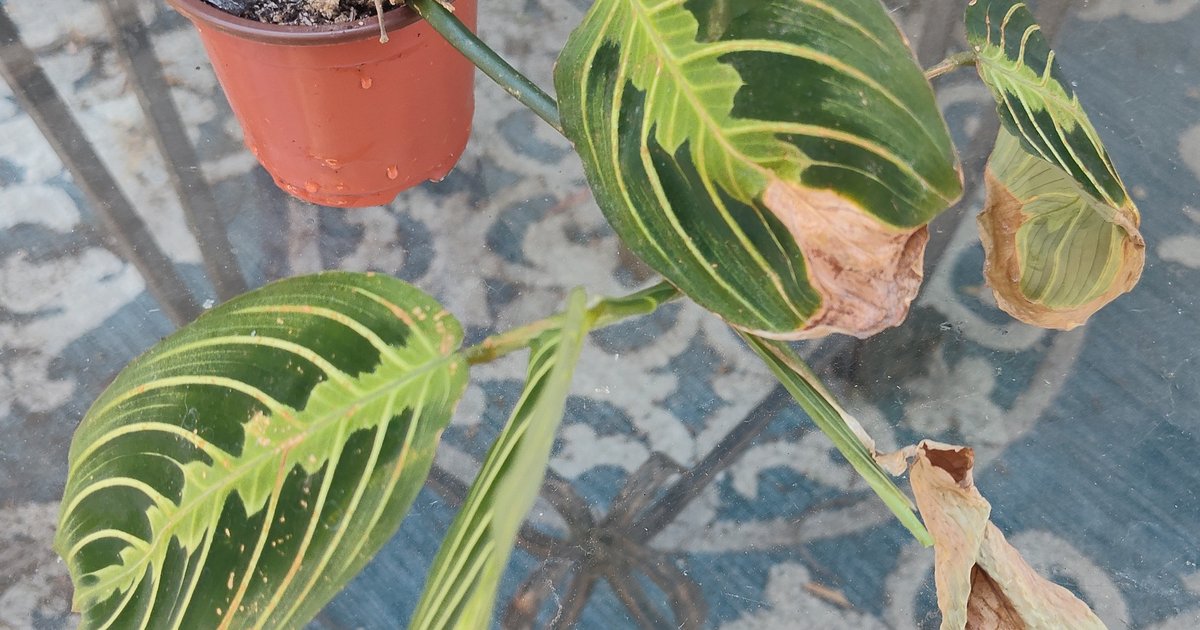
Short answer: brown leaves come in two kinds, and telling them apart does most of the work. Check whether the soil is still wet further down under the surface, then feel a brown leaf. Crispy brown with dry soil usually means thirst, sun or fertilizer burn. Soft, dark brown with soil that stays wet usually means too much water and trouble at the roots. Fix the cause, snip off the dead bits and judge it by the new leaves.
> "Crispy or soggy? That one question does most of the work." – Phil
Likely causes, most common first
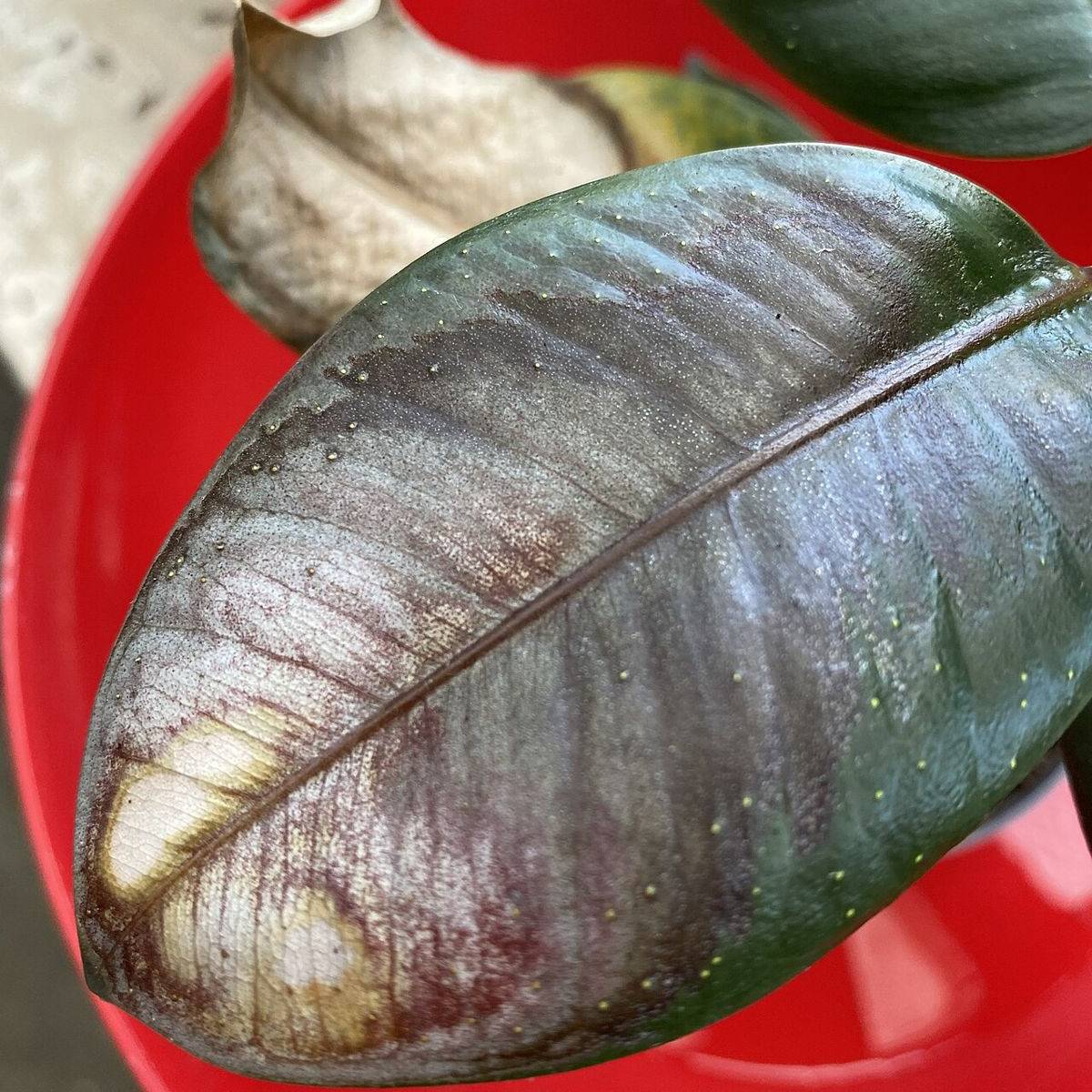
- Thirst. Over time, letting a plant go too dry leads to yellowing, scorching, browning and dropped leaves (University of Maryland Extension). Leaves feel dry and crispy, and the pot feels light.
- Too much water. Soft, dark brown or blackish leaves, often lower down, with soil that never seems to dry. Rotting roots look dark and feel soft (University of Maryland Extension).
- Too much sun. Brown or bleached patches on the side facing the window, often after a move to a brighter spot.
- Too much fertilizer. Browning along the edges and tips, sometimes with a white crust on the soil.
- Cold or drafts. Leaves go brown or black after sitting against a cold window or near a door (Iowa State Extension).
- Old age. One old leaf at the bottom browning now and then is normal.
Check the soil first, then follow the right path
If the soil is dry right through and the leaves are crispy: give it a slow, thorough drink until water runs out the bottom, then let it drain. If water rushes straight out, the roots may be packed tight, and it's worth checking whether it needs a bigger pot.
If the soil is still wet further down under the surface and the leaves are soft: stop watering until it dries out further down. Slide the plant out and look at the roots. Firm, pale roots are good. Dark, mushy, sour-smelling ones are rotting, so trim them off with clean scissors and repot in fresh mix.
If the soil is fine and only the tips are brown: see the brown tips guide (coming soon).
If none of that fits: start at what's wrong with my plant.
How to fix brown leaves
- Check whether the soil is still wet further down under the surface before every watering. Water when it has dried out further down.
- Make sure the pot drains, and empty the saucer after watering.
- Move it out of harsh direct sun if the brown patches face the window. Bright, indirect light suits most houseplants.
- Keep it away from heaters, vents and cold windows.
- Flush the soil with plenty of plain water if you've been fertilizing a lot, then ease off the feeding.
- Snip off fully brown leaves. They won't come back.
- Give it a few weeks. Clean, green new leaves are the real sign it's on the mend.
When to worry
Worry more if the brown is spreading fast, the stems are soft or black at the base, or the soil smells sour. That usually means the roots are in trouble. If most of the roots are mush, rooting a healthy cutting can be the best way to keep the plant going.
Where Alive-ish fits (and where it doesn't)
Alive-ish is a plant care app for people who've lost a few plants along the way. Snap a photo and run a health check to get likely causes with fixes, which helps when the brown doesn't fit neatly into crispy or soggy. You can also ask Phil a quick question if you just want a second opinion.
The plain details: you start with 20 free credits. There's no subscription, and credits never expire. A plant ID costs 2 credits, a health check costs 7, and a question for Phil costs 1. If you want more, packs start from US$4.97.
What it can't do: it can't feel the leaf or see the roots, and a photo can't tell whether the soil is still wet further down under the surface, so you still check that yourself. The answer is a best guess, not a guarantee, so use it alongside the checks in this guide.
Related guides
- What's wrong with my plant? Start here
- Brown tips on plant leaves (coming soon)
- Yellow leaves on plants (coming soon)
- How often to water houseplants (coming soon)
Sources
- University of Maryland Extension, Drought Stress to Indoor Plants: https://www.extension.umd.edu/resource/drought-stress-indoor-plants
- University of Maryland Extension, Diagnose Indoor Plant Problems: https://extension.umd.edu/resource/diagnose-indoor-plant-problems
- Iowa State University Extension, Diagnosing Houseplant Problems from Improper Environmental Conditions: https://yardandgarden.extension.iastate.edu/how-to/diagnosing-houseplant-problems-improper-environmental-conditions
(All three checked live from the box on 1 Nov 2026.)