
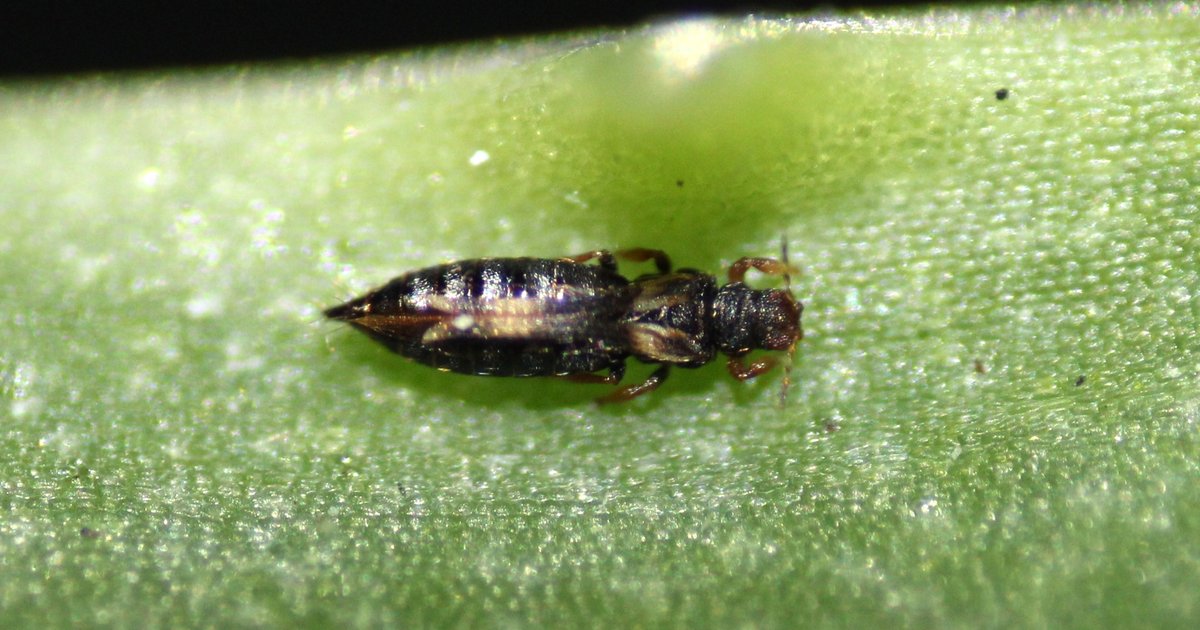
Short answer: silvery or pale streaky patches on the leaves, dotted with tiny black specks, usually mean thrips. Look closely in good light, and you may see tiny thin insects darting away. Move the plant away from the others, rinse it, hang sticky traps for the adults, and spray with insecticidal soap or horticultural oil, following the label. Keep at it for a few weeks, because some stages hide in the soil and in leaf crevices.
> "Small, fast and absolutely not paying rent." – Phil
How to tell it's thrips
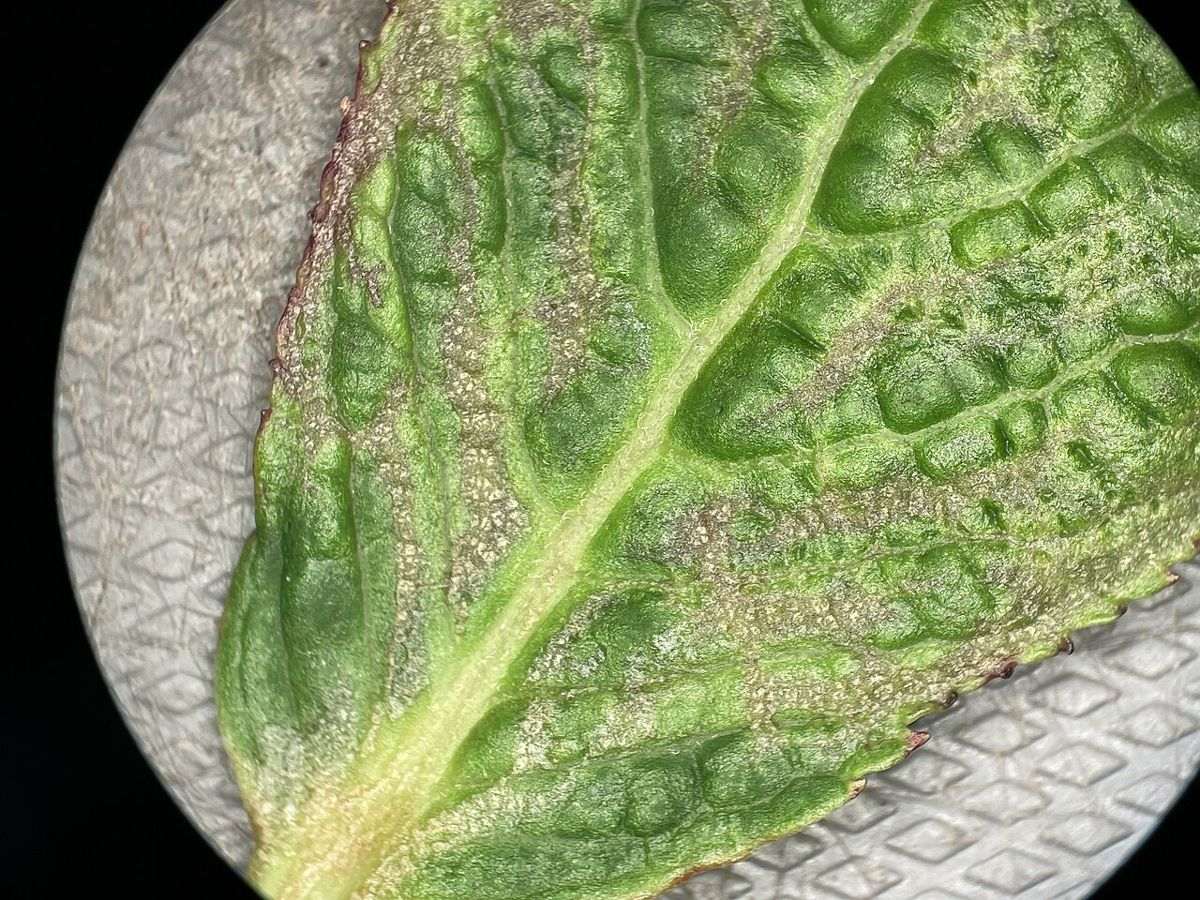
- Silvery, pale or streaky patches on the leaves. Thrips scrape the leaf surface and suck out the contents, and the emptied cells look pale or silvery (University of Maryland Extension).
- Tiny black specks on the damaged areas. That's their droppings (UC IPM).
- Twisted or papery new leaves, and sometimes leaves dropping early.
- Tiny, thin insects that wriggle or flick away when you disturb them. Tap a leaf over white paper to see them better.
Check the leaves first, then follow the right path
If you see silvery streaks with black specks and no webbing: very likely thrips. Go straight to the steps below.
If there's fine webbing too: that's spider mites. See the spider mites guide (coming soon).
If small dark flies are hovering around the soil: those are more likely fungus gnats. See how to get rid of fungus gnats.
If you can't find any bugs: start at what's wrong with my plant. Pale patches can also come from too much sun.
How to get rid of thrips
- Isolate the plant. Thrips move between plants easily.
- Cut off the worst-damaged leaves, plus any flowers (they love hiding in them), and bin them in a bag.
- Rinse the whole plant with lukewarm water, top and underneath the leaves. Cover the soil so it doesn't wash out.
- Hang blue or yellow sticky traps near the plant. They catch adults and show you whether numbers are dropping (UC IPM).
- Spray with insecticidal soap or horticultural oil. Follow the label, test on one leaf first, and wait a day before doing the whole plant. Cover every surface.
- Repeat every few days for a few weeks. Sprays only hit the thrips they touch, and new ones keep coming.
- Clear fallen leaves off the soil and check nearby plants too.
How you'll know it's working
Old damage won't fade, so watch the new leaves and the traps. Fewer thrips on the traps each week and clean new growth mean you're winning.
How to stop them coming back
- Check new plants and cut flowers before they come near your houseplants.
- Look at the leaves when you water, top and underneath.
- Go easy on fertilizer. Too much nitrogen and overwatering can both help thrips numbers grow (UC IPM). Check whether the soil is still wet further down under the surface before you water.
- Rinse or wipe leaves now and then.
Where Alive-ish fits (and where it doesn't)
Alive-ish is a plant care app for people who've lost a few plants along the way. Take a photo and run a health check, and you get likely causes with fixes. That's handy when you're staring at pale streaks and can't tell thrips from mites from sunburn. You can also ask Phil a quick question if you just want a second opinion.
The plain details: you start with 20 free credits. There's no subscription, and credits never expire. A plant ID costs 2 credits, a health check costs 7, and a question for Phil costs 1. If you want more, packs start from US$4.97.
What it can't do: it can't see thrips hiding in flowers, leaf crevices or the soil unless you get them in the shot, and it can't tell you a plant is clear for good. A photo also can't tell whether the soil is still wet further down under the surface, so you still check that yourself. The answer is a best guess, not a guarantee, so use it alongside the checks in this guide.
Related guides
- What's wrong with my plant? Start here
- How to get rid of fungus gnats
- Spider mites on houseplants (coming soon)
- Mealybugs on plants (coming soon)
Sources
- UC Statewide IPM Program, Thrips (Pest Notes): https://ipm.ucanr.edu/home-and-landscape/thrips/
- University of Maryland Extension, Thrips in Home Gardens: https://extension.umd.edu/resource/thrips-indoor-plants
- University of Maine Cooperative Extension, Controlling Insects and Disease in Houseplants (Bulletin #2613): https://extension.umaine.edu/publications/2613e/
(All three checked live from the box on 1 Nov 2026.)