
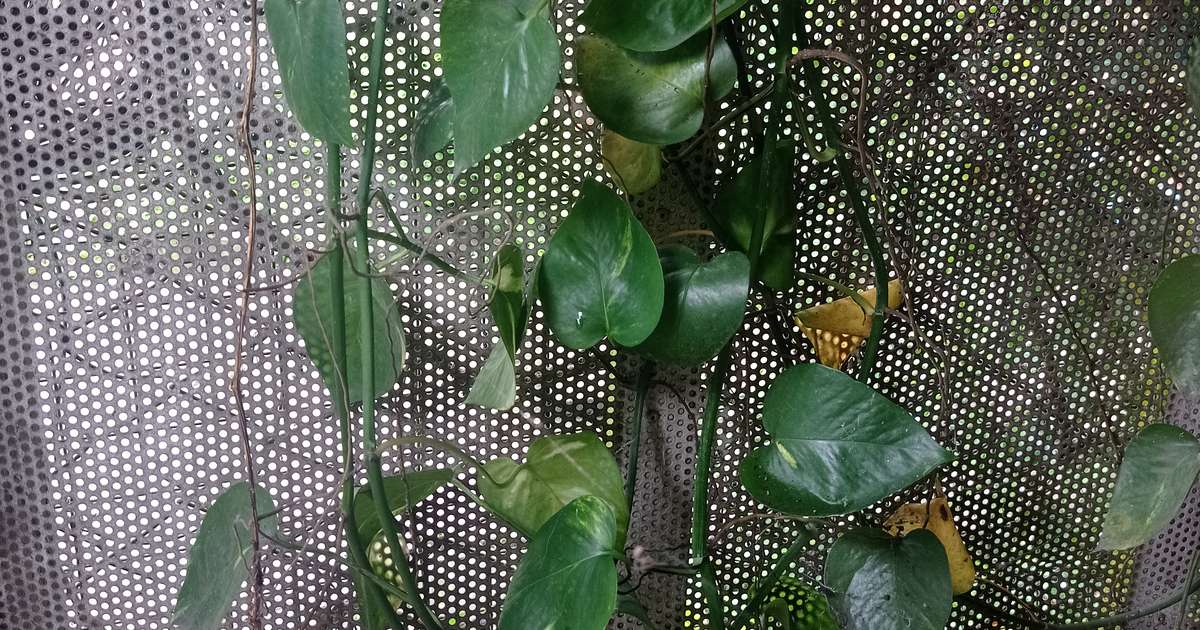
Short answer: a pothos with yellow leaves is most often sitting in soil that stays wet too long. Check whether it's still wet further down under the surface. If it is, stop watering until it dries out, empty any saucer and make sure the pot drains. If it's just the odd old leaf near the base and the vines keep growing, that's normal and you can relax.
> "It's not dying. It's drowning. Different problem, much easier fix." – Phil
What the yellow is telling you
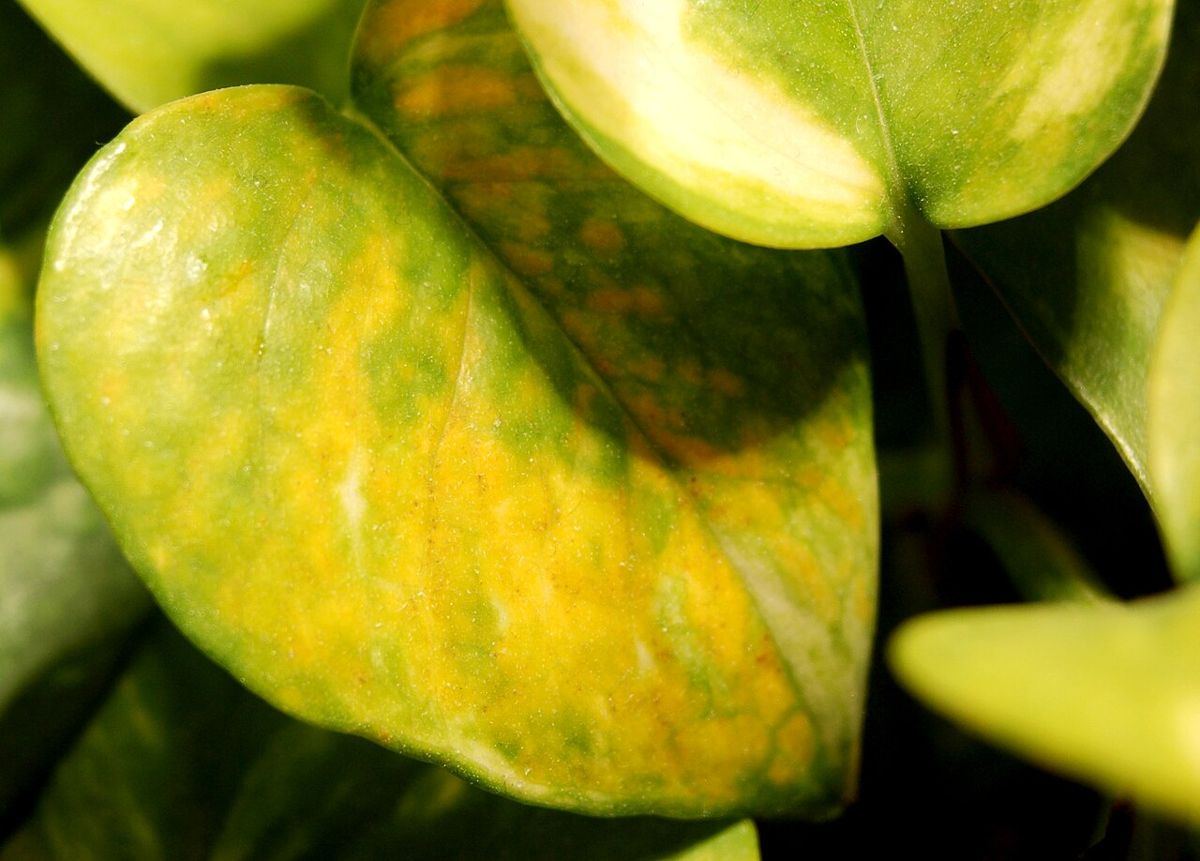
Pothos are tough, which is why they're so often someone's first plant, and the first one they overwater. Look at the pattern:
- One old leaf near the pot goes yellow, then drops: normal. Pothos let go of old leaves as the vines grow.
- Several leaves yellow at once, soil still wet, maybe soft stems: too much water, or a pot that doesn't drain.
- Leaves yellow and limp, soil dry right through, pot feels light: thirst. Pothos droop hard when they're dry and usually perk up soon after a good drink.
- Long bare vines, small pale leaves, inner leaves yellowing: not enough light.
- Yellow with brown, crispy patches on the window side: too much direct sun.
- Yellow speckles or fine webbing under the leaves: tiny pests. Start at what's wrong with my plant.
Overwatering is the number one reason indoor plants fail, and yellow leaves are often the first sign of it (University of Maryland Extension).
Check the soil first, then follow the right path
If the soil is still wet further down under the surface: that's your likely cause. Don't water again until it has dried out further down, not just on top. Empty the saucer or cover pot, and if the stems feel soft at the base, check the roots (step 6 below). The overwatered plant guide goes into more detail.
If the soil is dry all the way through: give it a slow, thorough drink until water runs out the bottom, then let it drain. If it was droopy and perks up, thirst was the problem. If the yellowing carries on even though the watering is now right, look at light next.
If the watering is fine either way: check the light. A pothos in a dim corner yellows slowly, while one in harsh afternoon sun gets yellow and crispy patches.
How to fix a yellowing pothos
- Check whether the soil is still wet further down under the surface before every watering. Water when it has dried out further down, then water well until it runs out the bottom. More in how often to water houseplants.
- Make sure the pot drains. A pretty pot with no hole is the classic trap, because water pools at the bottom where you can't see it. Keep the pothos in a plastic pot with holes inside the pretty one, and tip out any water that collects.
- Empty the saucer after watering so the roots never sit in water.
- Move it to bright, indirect light, like near a window but out of strong afternoon sun.
- Snip off leaves that are fully yellow. They won't go green again, and the plant looks better without them.
- If the stems are soft at the base, slide the plant out and look at the roots. Firm, pale roots are good. Dark, mushy, sour-smelling ones are rotting, so trim them off with clean scissors and repot in fresh mix.
- Give it a couple of weeks. New leaves coming in green is the real sign it's on the mend.
Will my pothos be okay?
Usually, yes. Pothos are forgiving. As long as some vines are firm and green and the roots aren't all mush, sorting out the water and light gets it growing again.
If the base has rotted, take a few cuttings from the healthiest vines. Each one needs a few leaves and at least one of the little brown bumps on the stem (that's where new roots grow from). Stand them in a glass of water in bright, indirect light, and you get to keep the plant, just in a new pot. If the whole plant looks like it's on its way out, see how to save a dying plant.
Where Alive-ish fits (and where it doesn't)
Alive-ish is a plant care app for people who've lost a few plants along the way. Snap a photo of your pothos and run a health check to get likely causes with fixes, or ask Phil a quick question if you just want to know whether that one yellow leaf is worth worrying about.
The plain details: you start with 20 free credits. There's no subscription, and credits never expire. A plant ID costs 2 credits, a health check costs 7, and a question for Phil costs 1. If you want more, packs start from US$4.97.
What it can't do: it can't see the roots or the water hiding in the bottom of a cover pot, and a photo can't tell whether the soil is still wet further down under the surface, so you still check that yourself. The answer is a best guess, not a guarantee, so use it alongside the checks in this guide.
Related guides
- Overwatered plant: signs and how to fix it
- How often to water houseplants
- How to save a dying plant
- What's wrong with my plant? Start here
Sources
- University of Maryland Extension, Yellowing Leaves on Indoor Plants: https://extension.umd.edu/resource/yellowing-leaves-indoor-plants
- University of Maryland Extension, Watering Indoor Plants: https://extension.umd.edu/resource/watering-indoor-plants
- Iowa State University Extension, Diagnosing Houseplant Problems from Improper Environmental Conditions: https://yardandgarden.extension.iastate.edu/how-to/diagnosing-houseplant-problems-improper-environmental-conditions
(All three checked live from the box on 1 Nov 2026.)