
Short answer: there's no single right number of days. Water when the plant needs it, not when the calendar says so. Before each drink, check whether the soil is still wet further down under the surface. If it is, wait. If it's dried out further down, water well until it runs out of the drainage hole, then empty the saucer.
Why "once a week" goes wrong
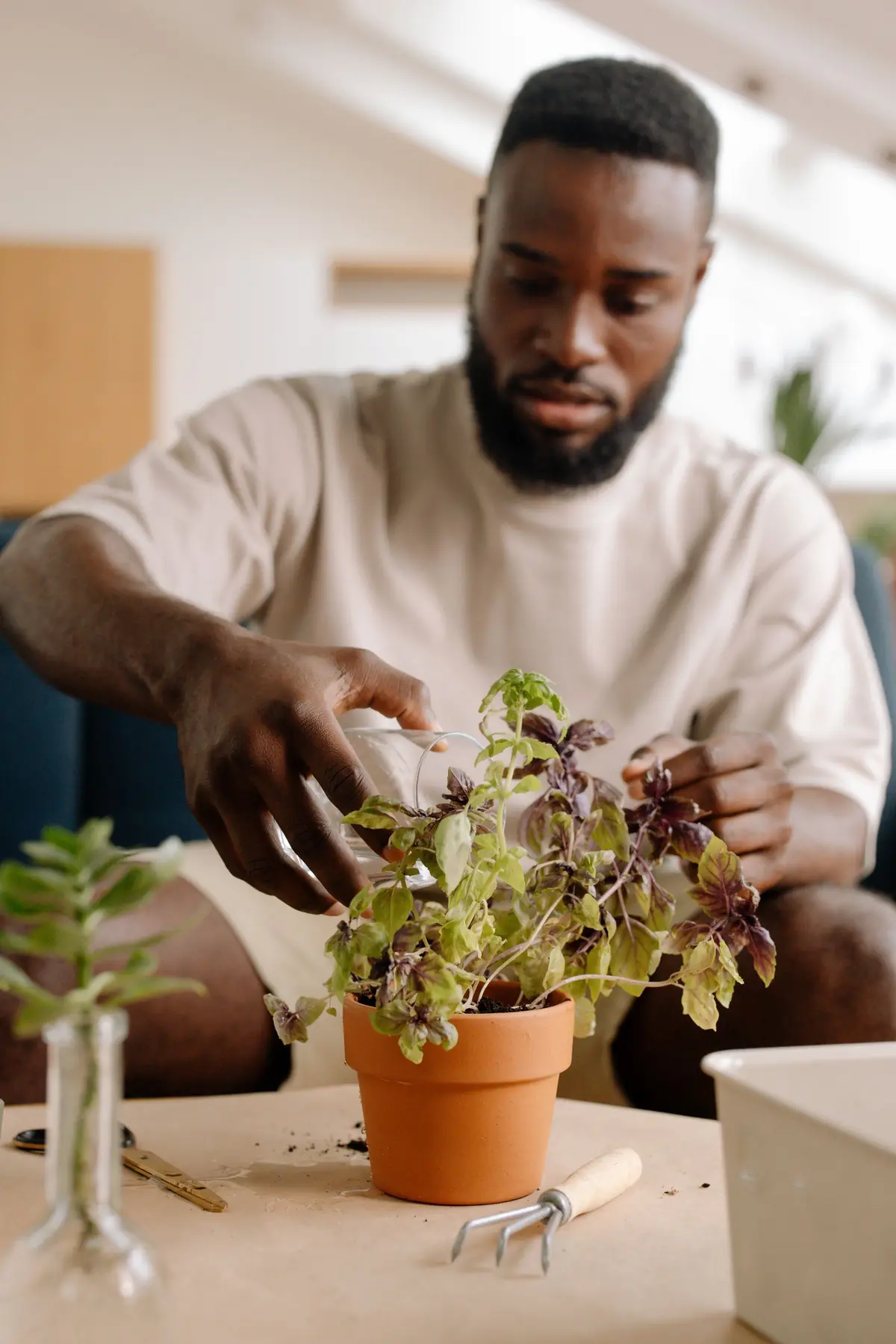
A fixed schedule ignores everything that changes how fast soil dries: the size and type of pot, the kind of plant, how much light it gets, the temperature, the season and the mix it's in. The same plant can need water twice as often in a bright summer window as in a dim winter corner. Water on a set day and you'll often water soil that's still wet, which is the most common way houseplants die. See overwatered plant.
How to tell if your plant needs water
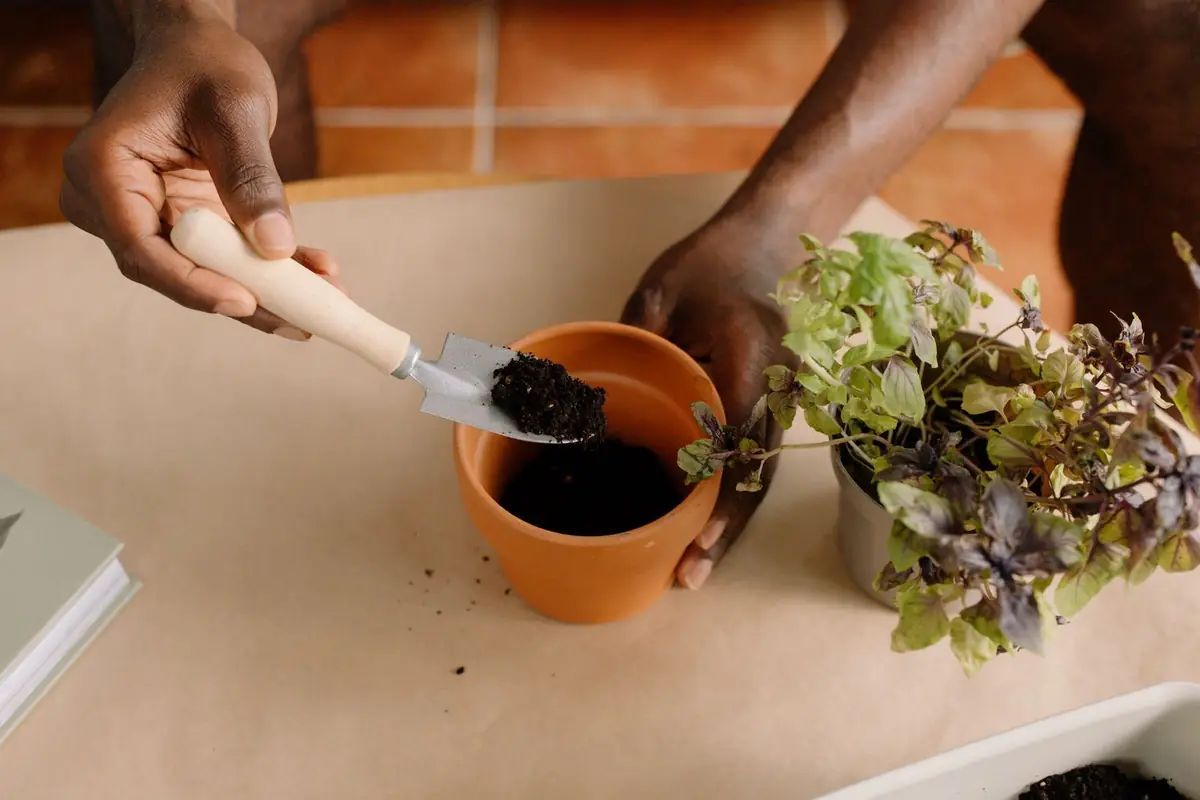
- Check whether it's still wet further down under the surface. The top layer dries first and can fool you. What matters is the soil the roots sit in.
- Lift the pot. A watered pot is noticeably heavier than a dry one. Lift it right after watering, then again a few days later, and you'll soon learn the difference.
- Look at the soil color. Damp soil is usually darker. Dry soil is lighter and may pull away from the pot edge.
- Look at the plant. Many plants droop a little when thirsty, and perk up within a day of a drink. But droop in wet soil means the opposite problem, so always check the soil before acting on droop.
What changes how often a plant needs water
- Plant type. Succulents and cacti store water and like to dry out well between drinks. Ferns and thin-leaved tropical plants usually prefer not to dry out completely. Most common houseplants sit in between.
- Light and warmth. More light and heat means faster drying.
- Season. Plants grow less and drink less in cooler, darker months.
- Pot. Terracotta dries faster than plastic or glazed pots. Small pots dry faster than big ones. Pots without drainage holes stay wet at the bottom.
- Mix. Chunky, airy mixes dry faster than dense, peaty ones.
- Roots. A plant that's filled its pot with roots dries out fast.
Because all of these change, your plant's needs change too. That's why checking beats counting.
How to water properly, and a routine that works
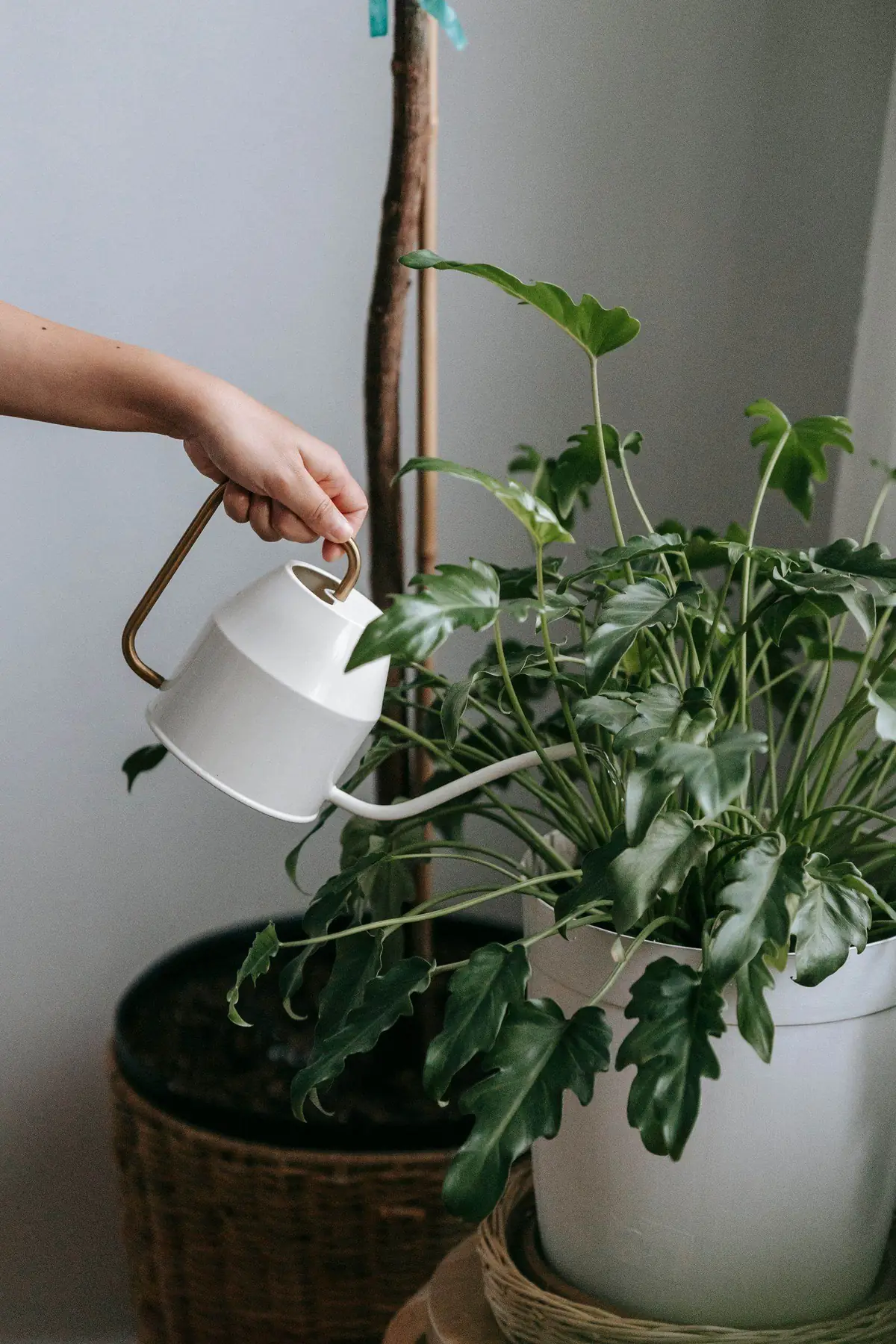
When you water, water well. Pour slowly until water runs out of the drainage hole, so the whole root ball gets wet. Then let it drain and empty the saucer. Small sips keep the top wet and the roots dry.
A simple routine:
- Pick one or two days a week to check your plants, not water them.
- On each check, see whether the soil is still wet further down under the surface, and lift the pot.
- Water only the ones that have dried out further down. Leave the rest.
- Empty saucers and cover pots after watering.
- Water less often in the cooler months, and check more often in hot weather.
Signs you've got it wrong. Too much water: yellow, soft leaves, drooping in wet soil, gnats, a sour smell. Too little: crispy edges, dry soil all the way through, a light pot, drooping that fixes itself after a drink. More in yellow leaves on plants and brown tips on leaves.
Where Alive-ish fits (and where it doesn't)
Alive-ish is a plant care app for people who've lost a few plants along the way. It sends one grouped daily nudge for plants that are due, so you check instead of guess. When you check and the soil's still damp, you can mark it as still damp in the app. And a health check from a photo gives likely causes with fixes if a plant starts looking off.
The plain details: you start with 20 free credits, with no card and no account. There's no subscription, and credits never expire. A plant ID costs 2 credits, a health check costs 7, and a question for Phil costs 1. If you want more, packs start from US$4.97. If an ID or health check fails or gives no answer, you get the credits back. Reminders come as one grouped daily nudge, not a pile of pings.
What it can't do: it can't feel the soil or know how fast your particular pot dries. A photo also can't tell whether the soil is still wet further down under the surface, so you still check that yourself. And the answer is a best guess, not a guarantee, so use it alongside the checks in this guide.
Related guides
- What's wrong with my plant? Start here
- Overwatered plant: signs and how to save it
- Yellow leaves on plants
- Brown tips on leaves
- Plant leaves turning brown
- How to get rid of fungus gnats
- Pothos leaves turning yellow
Sources
- Iowa State University Extension, Diagnosing houseplant problems from improper environmental conditions: https://yardandgarden.extension.iastate.edu/how-to/diagnosing-houseplant-problems-improper-environmental-conditions
- University of Maine Cooperative Extension, Bulletin #2613, Controlling insects and disease in houseplants: https://extension.umaine.edu/publications/2613e/
Frequently asked questions
How often should I water my houseplants?
There's no single number. Check whether the soil is still wet further down under the surface, and water when it's dried out further down.
Is it better to overwater or underwater a houseplant?
Most houseplants recover from a bit of thirst more easily than from soil that stays wet, so when in doubt, check and wait.
Should I water from the top or the bottom?
Either works. From the top, water until it runs out of the drainage hole. From the bottom, let the pot soak, then lift it out and let it drain.
Do houseplants need less water in winter?
Usually, yes. They grow less in cooler, darker months, so soil stays wet for longer. Keep checking before you water.