
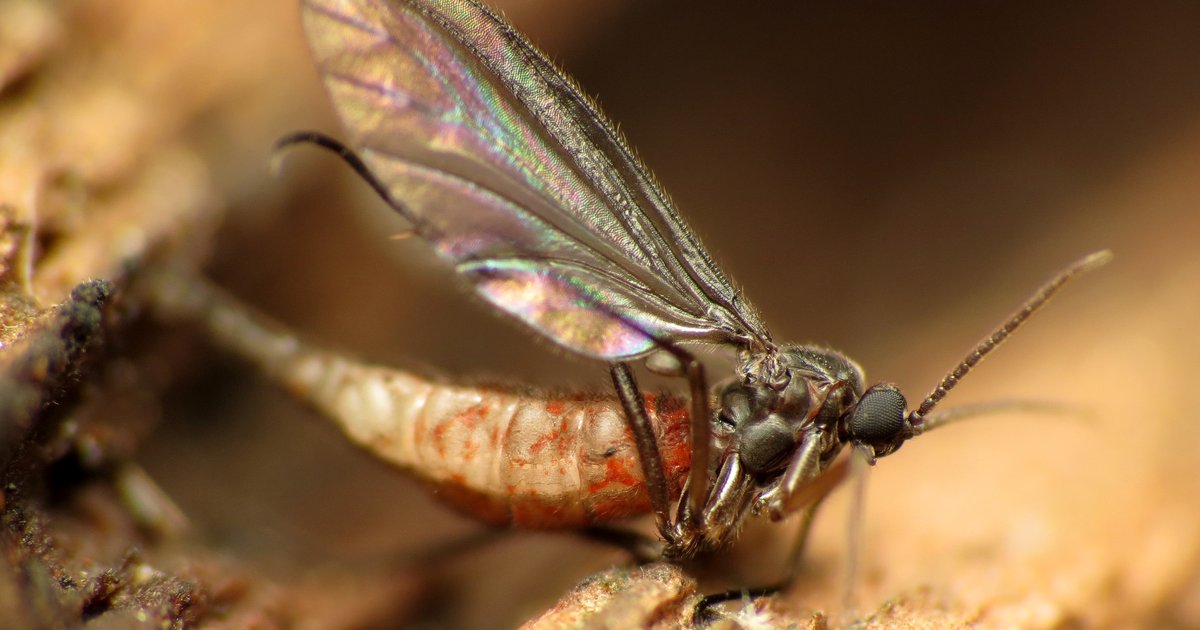
Short answer: the tiny clear worms with shiny black heads in your plant's soil are fungus gnat larvae. Put a slice of raw potato on the soil to check for them. Then stop watering until the pot dries out further down, cover the soil with sand so no new eggs get laid, and keep it up for about three weeks. Dry soil kills the larvae.
> "The flies are just the trailer. The real show is happening in your soil." – Phil
This page is about the bit you can't easily see: the larvae and eggs in the soil. If you're mostly fighting the flying adults, start with our main fungus gnats guide.
What fungus gnat larvae look like
- Tiny, thin worms, see-through or whitish, with a shiny black head.
- In the top layer of damp soil, especially near rotting leaves or bits of bark.
- Slime trails. In very wet, busy pots, larvae can leave shiny trails on the soil surface that look like tiny snail trails (UC IPM).
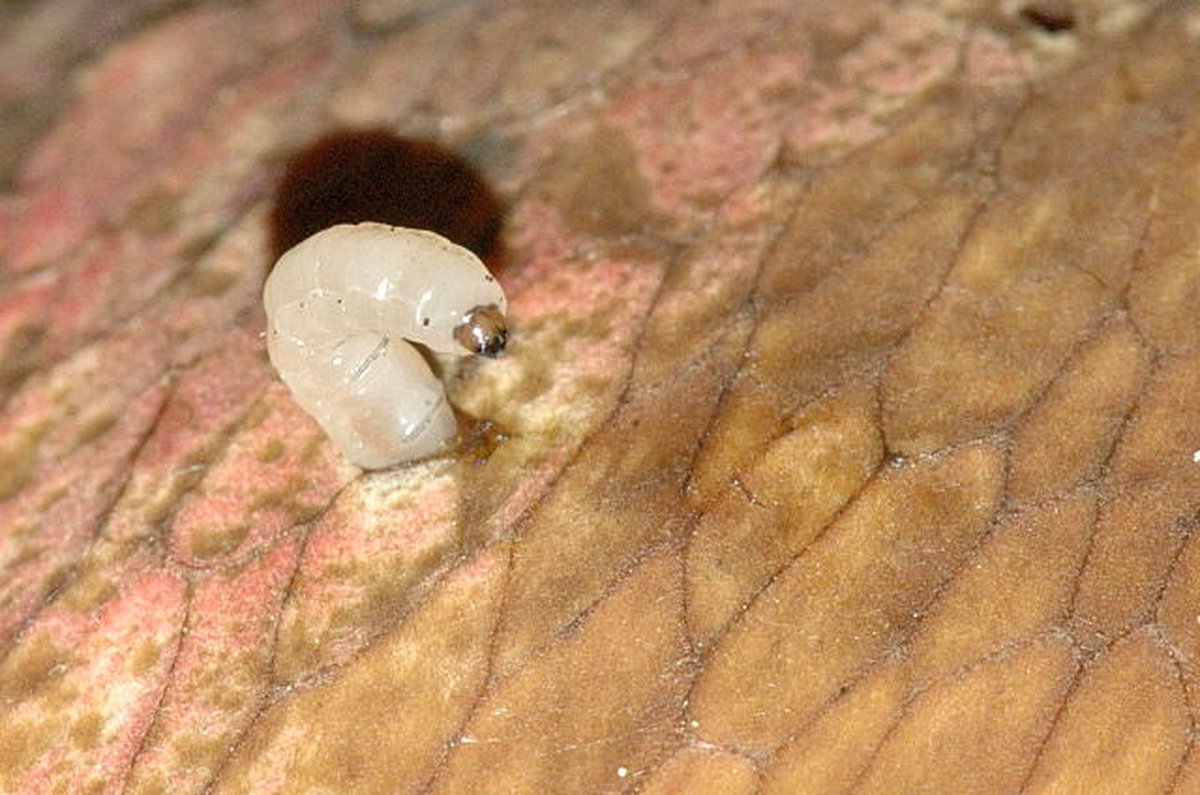
Photo: James K. Lindsey, CC BY-SA 3.0. A wild fungus gnat larva on wood; the ones in pots look much the same.
And the eggs? You won't spot them. Females lay tiny eggs in damp potting soil and rotting bits (UC IPM). Don't go hunting. Make the soil a bad place to lay eggs instead, and the problem runs out.
How to check for larvae: the potato test
- Cut a slice of raw potato and lay it cut side down on the soil. UC IPM mentions potato chunks as a way to check for larvae (UC IPM).
- Leave it a few days.
- Lift it and look underneath. Larvae gather under it. No larvae means the soil isn't the nursery, or you've already won.
Repeat it every week or so. It's the easiest way to know whether what you're doing is working.
Why they're there
Larvae need damp soil. They feed on fungi and rotting material, and overwatering helps those fungi grow (University of Maryland Extension). So larvae in the soil almost always means the soil is staying wet for too long.
Check whether the soil is still wet further down under the surface. If it is, that's your answer. If it's dry all the way through, the gnats may be breeding in another pot, so do the potato test on your other plants too.
How to get rid of them fast
What actually worked on our own plants: we let the pots dry out, put sand on top, didn't water anything until the gnats were gone, and checked the sand every day. The steps:
- Dry the pot out. Don't water again until the soil has dried further down, not just on top. When the soil dries, the larvae die (University of Maryland Extension). This step does most of the work.
- Empty saucers and cover pots so nothing sits in water.
- Cover the soil with sand. Once the top has dried, spread a thin layer of sand over it. It dries fast, so adults have nowhere damp to lay new eggs.
- Check the sand every day or so. Gnats will try to dig through. Fill any holes you see.
- Clear dead leaves and rotting bits off the soil so the larvae have less to eat.
- If numbers stay high, use BTI. Bti is the active ingredient in soil drench products labelled for fungus gnat larvae in indoor plants (University of Maryland Extension). Follow the label.
- Repot if it's really bad. Fresh mix in a clean pot with a drainage hole resets things.
Sticky traps help you see how many adults are left, but they don't touch the larvae. The full adult-side plan is in the fungus gnats guide.
How long it takes
Keep going for about three weeks. UC IPM says eggs hatch in about 3 days, larvae take about 10 days to become pupae, and adults come out about 4 days later, so a full generation takes around 17 days at 24°C (75°F) (UC IPM). Stop too early and the next batch picks up where the last one left off.
You'll know it's working when the potato slice comes up clean and you're seeing fewer flies each week. A few adults hanging around for a week or two after the larvae are gone is normal.
Once they're gone, take the sand off. It holds moisture in the soil underneath for longer.
How to stop them coming back
- Water by the soil, not the calendar. Check whether it's still wet further down under the surface first. See how often to water houseplants.
- Use pots with drainage holes and empty the saucer after watering.
- Keep opened bags of potting mix sealed, and check new plants before they move in with the others.
Plant wilting in wet soil as well? Larvae can chew roots, but rotting roots are a far more common cause (UC IPM). Check our root rot guide.
Where Alive-ish fits (and where it doesn't)
Alive-ish is a plant care app for people who've lost a few plants along the way. Run a health check from a photo and you get likely causes with fixes, which helps when you're not sure whether it's pests, water or something else. Watering reminders help you water on a schedule you set for each plant, so the soil gets a chance to dry out between drinks.
The plain details: you start with 20 free credits. There's no subscription, and credits never expire. A plant ID costs 2 credits, a health check costs 7, and a question for Phil costs 1. If you want more, packs start from US$4.97.
What it can't do: a photo can't see larvae hiding in the soil, and it can't tell whether the soil is still wet further down. The potato test and your finger still do that part. The answer is a best guess, not a guarantee.
Related guides
- How to get rid of fungus gnats
- How often to water houseplants
- Root rot: what it looks like and how to fix it
- Overwatered plant? The signs and how to fix it (coming soon)
Sources
- UC Statewide IPM Program, Fungus Gnats: https://ipm.ucanr.edu/home-and-landscape/fungus-gnats/
- University of Maryland Extension, Fungus Gnats on Indoor Plants: https://extension.umd.edu/resource/fungus-gnats-indoor-plants
(Both checked live from the box on 8 Nov 2026.)