
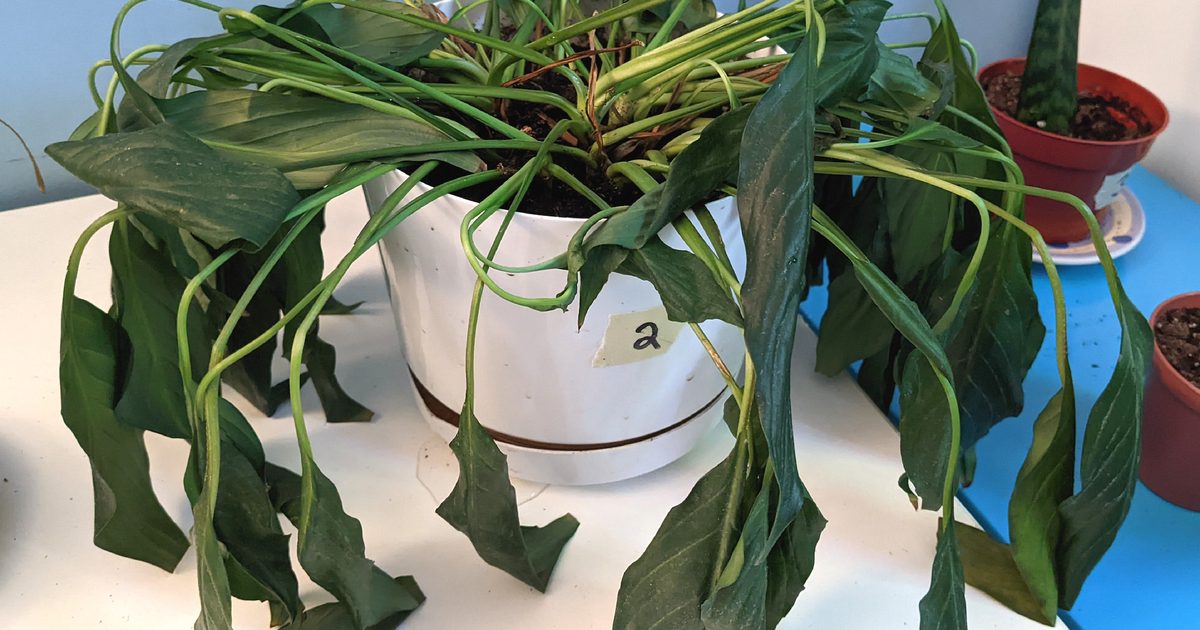
Short answer: a drooping peace lily is usually thirsty, and it bounces back fast once it gets a proper drink. But soggy soil can make it droop too. So check whether the soil is still wet further down under the surface before you do anything. Dry all the way through: water it well. Still wet: don't water, and check the drainage and the roots.
> "Peace lilies faint dramatically for attention. Check the soil before you call it." – Phil
Why peace lilies droop
Peace lilies are honest plants. When something's off, the whole thing flops. The usual causes, from most to least common:
- Thirst. The soil dried out too far. This is the classic dramatic flop, and the easiest fix.
- Too much water. Soil that stays soggy pushes the air out, the roots start to rot and can't drink, so the plant droops even though it's sitting in water. Clemson Extension warns that leaving it in a saucer of water leads to root rot (Clemson HGIC).
- Too much direct sun. Peace lilies like bright, indirect light. Direct sun, especially hot afternoon sun, scorches the leaves and dries the plant out fast.
- Cold or drafts. Cold windows, heater and air-conditioner vents all stress it (Clemson HGIC).
- Outgrown pot. A pot packed with roots dries out very quickly, so it keeps going thirsty.
- Just repotted. A short sulk after a move is normal.
Check the soil first, then follow the right path
If the soil is dry all the way through and the pot feels light: it's thirsty. Water slowly until water runs out of the drainage hole, let it drain, then empty the saucer. It should start lifting within a few hours. If it flops like this every few days, see "outgrown pot" below.
If the soil is still wet further down under the surface: don't water, even though it looks thirsty. Empty the saucer or cover pot, make sure the pot has a drainage hole, and give it a day or two. If it doesn't perk up, check the roots (next section).
If the soil is somewhere in between and it's droopy: look at where it's sitting. Move it out of direct sun and away from vents and cold glass, then check the soil again tomorrow.
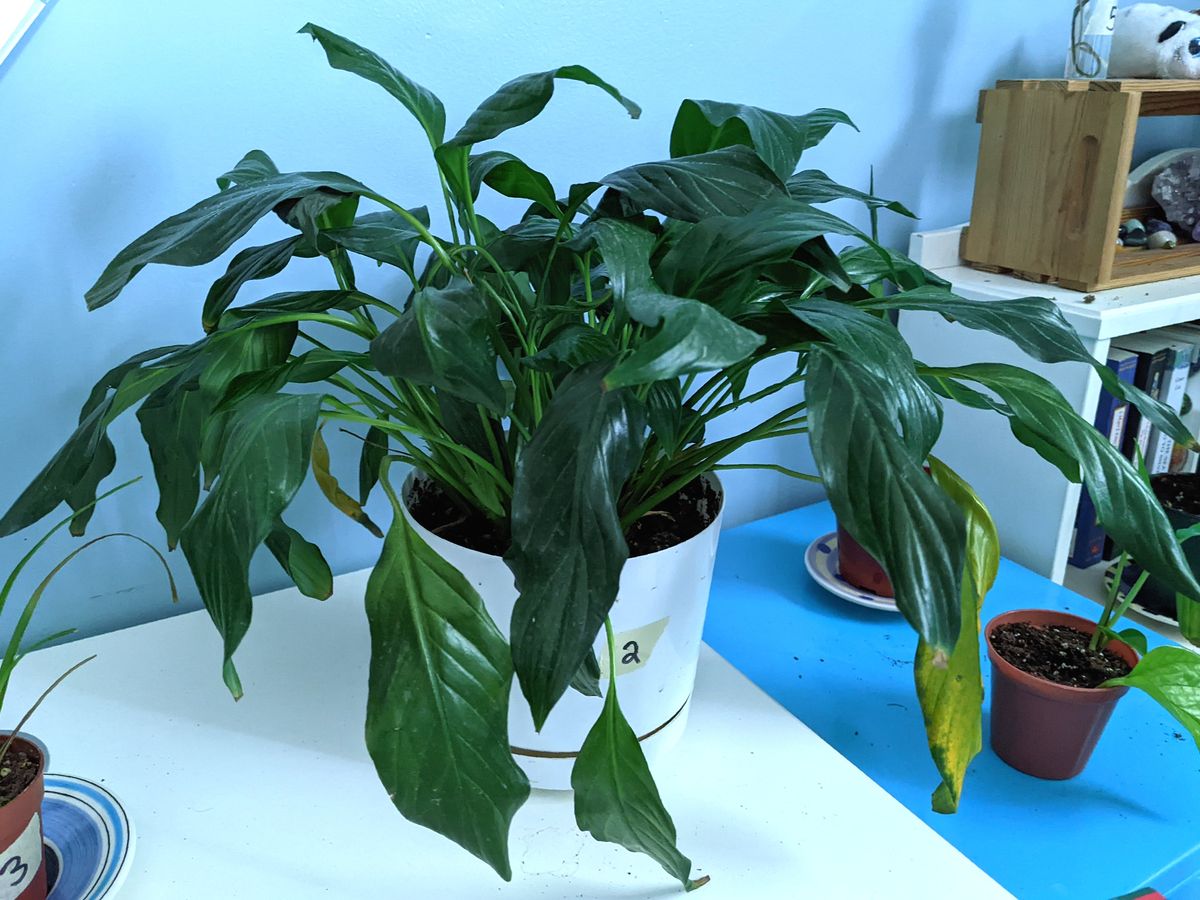
When it's wet and still droopy: check the roots
- Slide the plant out of its pot. Tip it on its side and ease it out, holding the base of the stems.
- Look at the roots. Healthy roots are firm and pale. Rotten roots are brown or black, soft and mushy, and often smell (University of Maryland Extension).
- Cut off the rotten roots with clean scissors, plus any leaves that have gone fully yellow.
- Repot in fresh potting mix in a clean pot with a drainage hole. Don't reuse the soggy soil.
- Wait before watering again until it has dried out a little further down.
The full walkthrough is in our root rot guide.
Yellow leaves and brown tips
Yellow leaves: one old leaf at the bottom yellowing now and then is normal. Lots of yellow usually comes back to water, either drying out too far too often or soil that stays wet. Snip fully yellow leaves off at the base; they won't turn green again.
Brown tips: usually from the soil drying out too far between drinks, too much direct sun, or dry air. NC State Extension also lists too much fertilizer building up in the soil as a cause of burnt tips (NC State Extension). You can trim the brown bits off with clean scissors, following the leaf's shape. Brown tips on other plants are covered in the (coming soon) brown tips guide.
Drooping after repotting
A bit of droop for a few days after repotting is normal while the roots settle. Water it well once after repotting, keep it out of direct sun, then go back to checking whether it's still wet further down before each drink. Clemson suggests going up only a little in pot size, because a pot much bigger than the roots stays wet for too long (Clemson HGIC).
Outgrown pot
If it's flopping every few days even though you water it well, and roots are poking out of the drainage hole or circling the bottom, it has probably outgrown its pot. Move it into a pot just a little bigger, with fresh mix and a drainage hole.
How to keep it from fainting
- Water by the soil, not the calendar. Before each drink, check whether it's still wet further down under the surface. Peace lilies like the soil kept lightly moist, never soggy (NC State Extension).
- Bright, indirect light. Near a window but out of direct sun. It copes with lower light, but it grows and flowers better with more.
- Keep it warm and out of drafts. Away from heater and air-conditioner vents and cold glass in winter.
- Empty saucers and cover pots after every watering.
- Go easy on fertilizer. A little goes a long way with peace lilies.
Got pets? Peace lilies aren't a snack. If a cat or dog chews one, call your vet, or see the ASPCA's peace lily page.
Not sure it's a watering problem at all? Start at what's wrong with my plant.
Where Alive-ish fits (and where it doesn't)
Alive-ish is a plant care app for people who've lost a few plants along the way. Run a health check from a photo and you get likely causes with fixes, which helps when you can't tell if it's water, light or something else. Watering reminders help you water on a schedule you set for each plant, so a peace lily doesn't have to faint to get your attention.
The plain details: you start with 20 free credits. There's no subscription, and credits never expire. A plant ID costs 2 credits, a health check costs 7, and a question for Phil costs 1. If you want more, packs start from US$4.97.
What it can't do: a photo can't tell whether the soil is still wet further down under the surface, and it can't see the roots. You still check both yourself. The answer is a best guess, not a guarantee, so use it alongside the checks in this guide.
Related guides
- What's wrong with my plant? Start here
- How often to water houseplants
- Root rot: what it looks like and how to fix it
- How to get rid of fungus gnats
- Brown tips on leaves (coming soon)
- Why are my plant's leaves turning yellow? (coming soon)
Sources
- Clemson Cooperative Extension Home & Garden Information Center, Peace Lily: https://hgic.clemson.edu/factsheet/peace-lily/
- North Carolina Extension Gardener Plant Toolbox, Spathiphyllum (Peace Lily): https://plants.ces.ncsu.edu/plants/spathiphyllum/
- University of Maryland Extension, Root Rots of Indoor Plants: https://extension.umd.edu/resource/root-rots-indoor-plants
(All three checked live from the box on 3 Nov 2026.)