
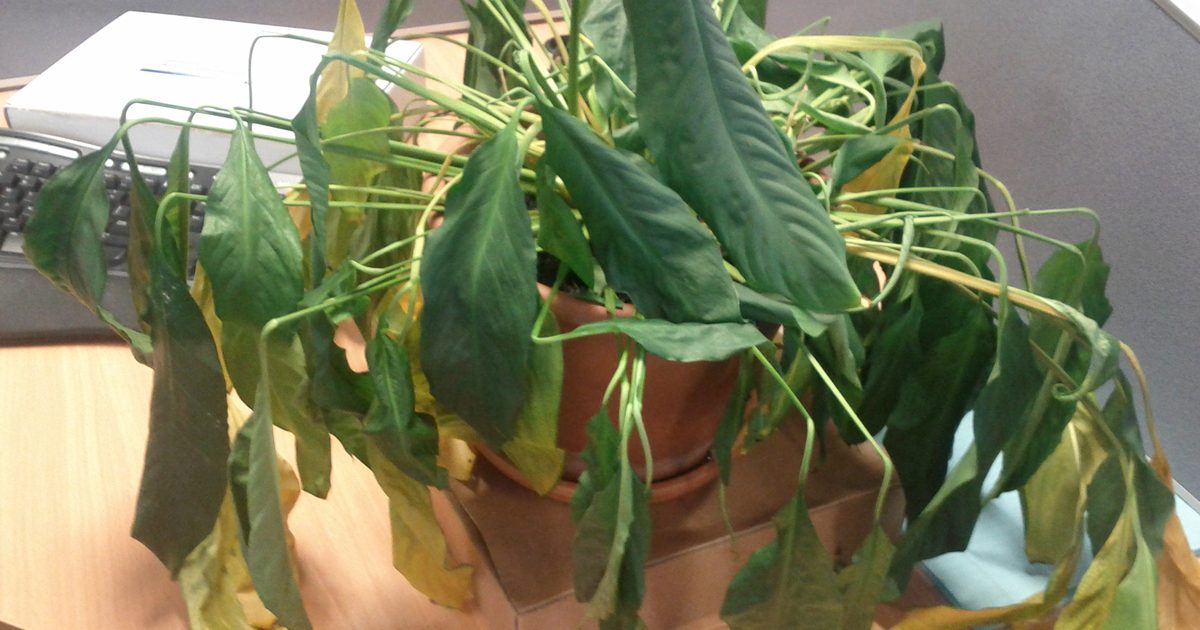
Short answer: a drooping plant is almost always a water problem, and it can be too little or too much. They look the same from the top, so check whether the soil is still wet further down under the surface before you do anything. Dry all the way through: water it well. Still wet: don't water, and check the drainage and the roots.
> "Droopy in dry soil is a cry for a drink. Droopy in wet soil is a cry for help." – Phil
Why plants droop
A plant stays upright because its leaves and stems are full of water. When the roots can't keep up, it sags. The usual causes, from most to least common:
- Thirst. The soil dried out too far. University of Maryland Extension says a plant that's too dry wilts and turns gray-green (UMD Extension).
- Too much water. Soil that stays soggy rots the roots, and rotten roots can't drink. UMD lists wilting of lower and inner leaves as a main sign of overwatering (UMD Extension).
- Heat and hot sun. On a hot day a plant can lose water faster than the roots can supply it. If the soil still has moisture, it usually perks up by evening (UMD Extension).
- Cold or drafts. Cold windows and heater or air-conditioner vents stress plants.
- Outgrown pot. A pot packed with roots dries out very fast, so the plant keeps going thirsty.
- Just repotted or moved. A short sulk after a change is normal.
Check the soil first, then follow the right path
If the soil is dry all the way through and the pot feels light: it's thirsty. Water slowly until water runs out of the drainage hole, let it drain, then empty the saucer. Most plants start lifting within a few hours to a day. South Dakota State Extension lists wilting, dry soil and a light pot together as signs of too little water (SDSU Extension).
If the soil is still wet further down under the surface: don't water, even though it looks thirsty. Empty the saucer or cover pot, make sure the pot has a drainage hole, and give it a day or two. If it doesn't perk up, check the roots (next section).
If the soil is somewhere in between: look at where it's sitting. Move it out of hot direct sun and away from vents and cold glass, then check the soil again tomorrow.
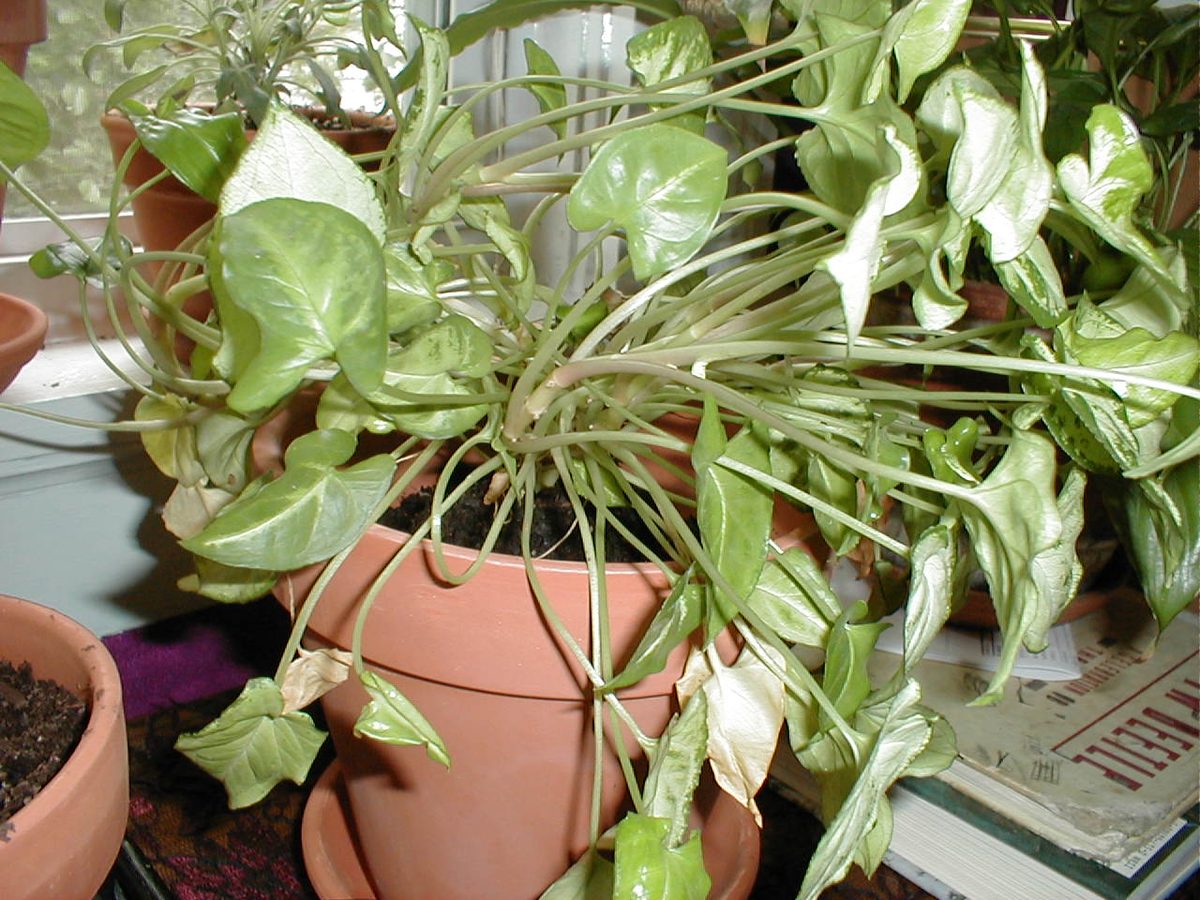
Wet soil and still droopy: check the roots
- Slide the plant out of its pot. Tip it on its side and ease it out, holding the base of the stems.
- Look at the roots. Healthy roots are firm and pale. Rotten roots are brown or black, soft and mushy, and often smell (University of Maryland Extension).
- Cut off the rotten roots with clean scissors.
- Repot in fresh potting mix in a clean pot with a drainage hole. Don't reuse the soggy soil.
- Wait before watering again until it has dried out a little further down.
The full walkthrough is in our root rot guide.
Droopy every few days? It may have outgrown its pot
If it flops again soon after every good drink, and roots poke out of the drainage hole or circle the bottom, the pot is probably too small. Move it into a pot just a little bigger, with fresh mix and a drainage hole. A pot much bigger than the roots stays wet too long.
How to keep it from drooping
- Water by the soil, not the calendar. UMD says plants shouldn't be watered on a schedule but when they need it (UMD Extension). Before each drink, check whether it's still wet further down under the surface.
- Use pots with drainage holes, and empty saucers and cover pots after watering.
- Keep it out of hot direct sun and drafts unless you know it's a sun lover.
- Water more often in summer and less in winter, because plants dry out faster when it's warm and bright.
Some plants are famous for dramatic flops. Peace lilies are the classic: see peace lily drooping. Not sure it's water at all? Start at what's wrong with my plant.
Where Alive-ish fits (and where it doesn't)
Alive-ish is a plant care app for people who've lost a few plants along the way. Run a health check from a photo and you get likely causes with fixes, which helps when you can't tell if it's water, light or something else. Watering reminders help you water on a schedule you set for each plant, and you can change it whenever your plant tells you otherwise.
The plain details: you start with 20 free credits. There's no subscription, and credits never expire. A plant ID costs 2 credits, a health check costs 7, and a question for Phil costs 1. If you want more, packs start from US$4.97.
What it can't do: a photo can't tell whether the soil is still wet further down under the surface, and it can't see the roots. You still check both yourself. The answer is a best guess, not a guarantee, so use it alongside the checks in this guide.
Related guides
- What's wrong with my plant? Start here
- How often to water houseplants
- Root rot: what it looks like and how to fix it
- Peace lily drooping? How to perk it back up
- Overwatered plant? The signs and how to fix it (coming soon)
Sources
- University of Maryland Extension, Watering Indoor Plants: https://extension.umd.edu/resource/watering-indoor-plants
- University of Maryland Extension, Drought Stress on Indoor Plants: https://www.extension.umd.edu/resource/drought-stress-indoor-plants
- University of Maryland Extension, Indoor Plant Problems (Nonliving): https://extension.umd.edu/resources/yard-garden/indoor-plants/indoor-plant-problems-nonliving
- University of Maryland Extension, Root Rots of Indoor Plants: https://extension.umd.edu/resource/root-rots-indoor-plants
- South Dakota State University Extension, Troubleshooting Common Problems With Houseplants: https://extension.sdstate.edu/troubleshooting-common-problems-houseplant-how
(All checked live from the box on 4 Nov 2026.)