
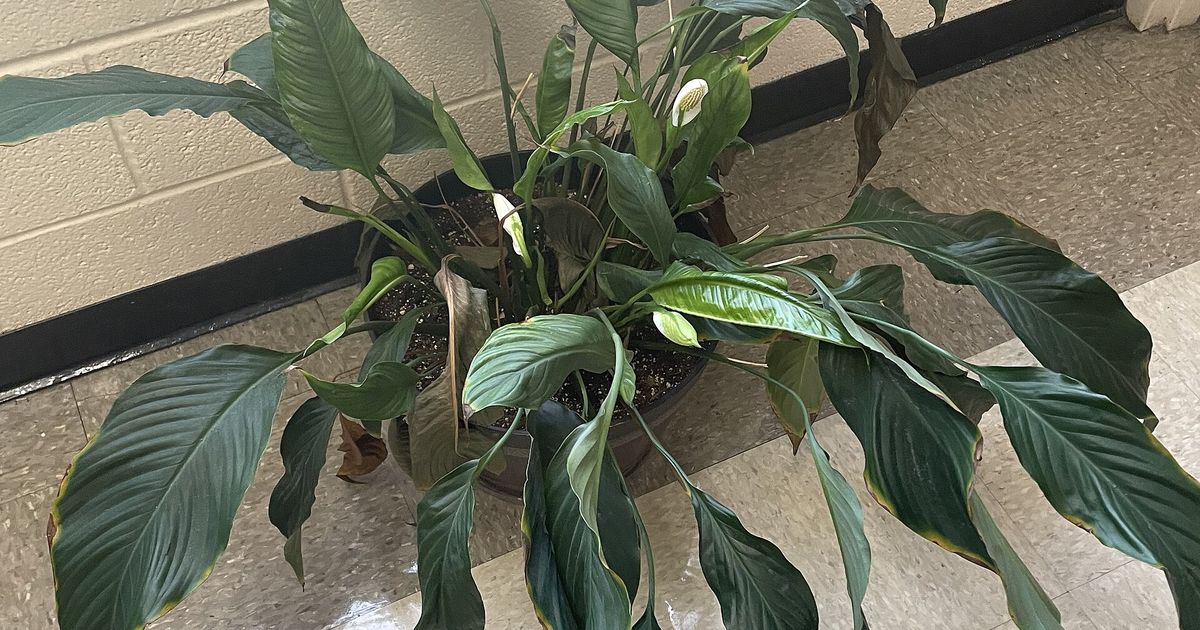
Short answer: if your peace lily is drooping but the soil is still moist, don't water it. Wet soil plus drooping usually means the roots aren't drinking, most often because they've started to rot. Empty the saucer, move it somewhere warm and out of drafts, and give it a day or two. Still flat? Slide it out and check the roots.
> "It's sitting in a puddle and still fainting. That's not thirst, that's a cry for drainage." – Phil
If the soil is actually dry, this isn't your page. Head to the main peace lily drooping guide, give it a drink and it should bounce back.
First, make sure it's really wet
The top can feel damp while the rest is dry, or dry on top while it's soggy underneath. Check whether the soil is still wet further down under the surface. Lift the pot too: a heavy pot is a wet pot.
Why a peace lily droops in wet soil
From most to least common:
- Root rot. Soil that stays soggy pushes out the air, the roots rot, and rotten roots can't take up water. So the plant wilts even with water all around it. University of Maryland Extension notes that root rot can cause wilting even when the potting mix has enough moisture (UMD Extension).
- Sitting in water. A saucer or cover pot full of water keeps the bottom of the pot soaked. Clemson warns this leads to root rot (Clemson HGIC).
- Pot too big. Lots of soil and not many roots means the mix stays wet for ages. Clemson says too large a pot can keep the mix too wet and lead to root rot (Clemson HGIC).
- Cold or drafts. Clemson suggests keeping peace lilies above about 16°C (60°F) and away from heater and air-conditioner vents (Clemson HGIC). Cold soil also stays wet longer.
- Just repotted. Disturbed roots drink less for a while, so some droop in moist soil is normal for a few days.
What to do, step by step
- Don't water. Even if it looks parched.
- Empty the saucer or cover pot, and make sure the pot has a drainage hole. No hole? Move it into one that has.
- Move it somewhere warm and bright, out of direct sun, away from vents, drafts and cold windows.
- Wait a day or two. If it was just a soggy patch or a cold night, it often lifts as the soil dries a little.
- Still droopy? Check the roots. Tip the pot on its side and ease the plant out, holding the base of the stems.
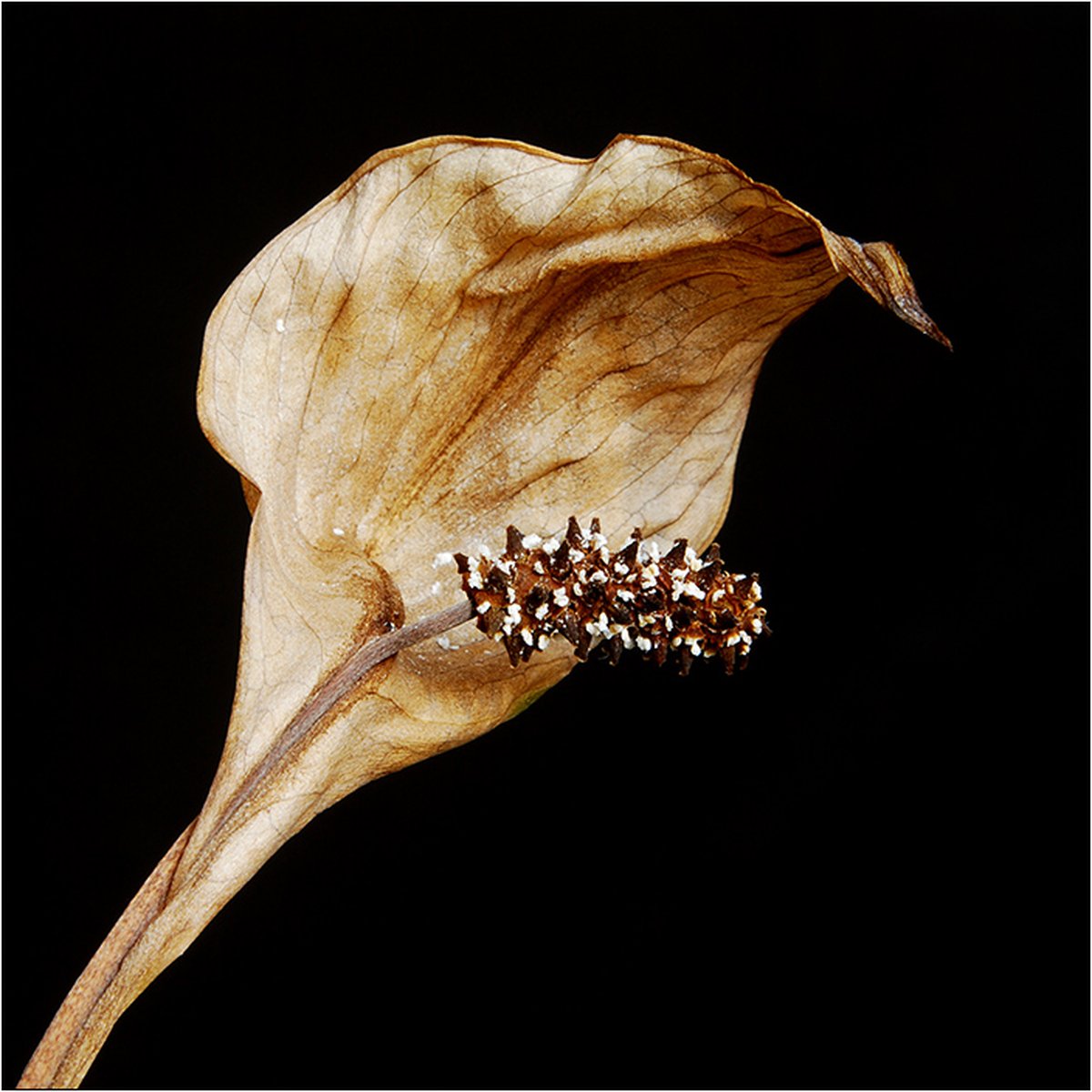
Photo: David Santaolalla, CC BY 2.0. Old flowers going brown like this is normal and not the problem; snip them off at the base.
Reading the roots
Firm, pale roots: good news. The roots are fine, so the droop is more likely cold, a recent repot or a pot that's too big. Put it back, keep it warm, and let the soil dry slightly before the next drink.
Brown or black, soft, mushy roots that may smell: that's root rot (UMD Extension).
- Cut off every mushy root with clean scissors, plus any leaves that have gone fully yellow.
- Repot in fresh potting mix, in a clean pot with a drainage hole, only a little bigger than the roots that are left.
- Don't reuse the soggy soil.
- Wait before watering until the top of the new mix has dried slightly.
If almost all the roots are mushy and the base of the stems is soft, it may be too far gone, but it's worth a try. The full walkthrough is in our root rot guide.
How long until it perks up?
A thirsty peace lily lifts within hours. A wet-soil peace lily takes longer. After cutting away rot, expect a few weeks before it looks properly happy again, and it may lose a few leaves on the way. New upright leaves are the sign it's turned the corner.
Keeping it from happening again
- Water by the soil, not the calendar. Clemson says to keep the soil moist but not soggy and let it dry out slightly between drinks (Clemson HGIC). See how often to water houseplants.
- Empty the saucer every time, about half an hour after watering.
- Go up only a little in pot size when you repot. Peace lilies like being slightly pot-bound (Clemson HGIC).
- Water less in cool months. NC State Extension notes cold and drafty conditions slow growth right down (NC State Extension), and a slow plant drinks less.
Got pets? Peace lilies aren't a snack. If a cat or dog chews one, call your vet, or see the ASPCA's peace lily page.
Where Alive-ish fits (and where it doesn't)
Alive-ish is a plant care app for people who've lost a few plants along the way. Run a health check from a photo and you get likely causes with fixes, which helps when you can't tell if it's water, light or something else. Watering reminders help you water on a schedule you set for each plant, and you can push one back when the soil's still wet.
The plain details: you start with 20 free credits. There's no subscription, and credits never expire. A plant ID costs 2 credits, a health check costs 7, and a question for Phil costs 1. If you want more, packs start from US$4.97.
What it can't do: a photo can't tell whether the soil is still wet further down under the surface, and it can't see the roots. You still check both yourself. The answer is a best guess, not a guarantee.
Related guides
- Peace lily drooping? How to perk it back up
- Root rot: what it looks like and how to fix it
- How often to water houseplants
- What's wrong with my plant? Start here
- Why is my plant drooping? Check the soil first (coming soon)
Sources
- Clemson Cooperative Extension Home & Garden Information Center, Peace Lily: https://hgic.clemson.edu/factsheet/peace-lily/
- University of Maryland Extension, Root Rots of Indoor Plants: https://extension.umd.edu/resource/root-rots-indoor-plants
- North Carolina Extension Gardener Plant Toolbox, Spathiphyllum (Peace Lily): https://plants.ces.ncsu.edu/plants/spathiphyllum/
(All three checked live from the box on 8 Nov 2026.)